How Funding Method Selection Influences Progression From Classic Reels to Interactive Dealer Experiences
Henrik Braun · Sep 25, 2026
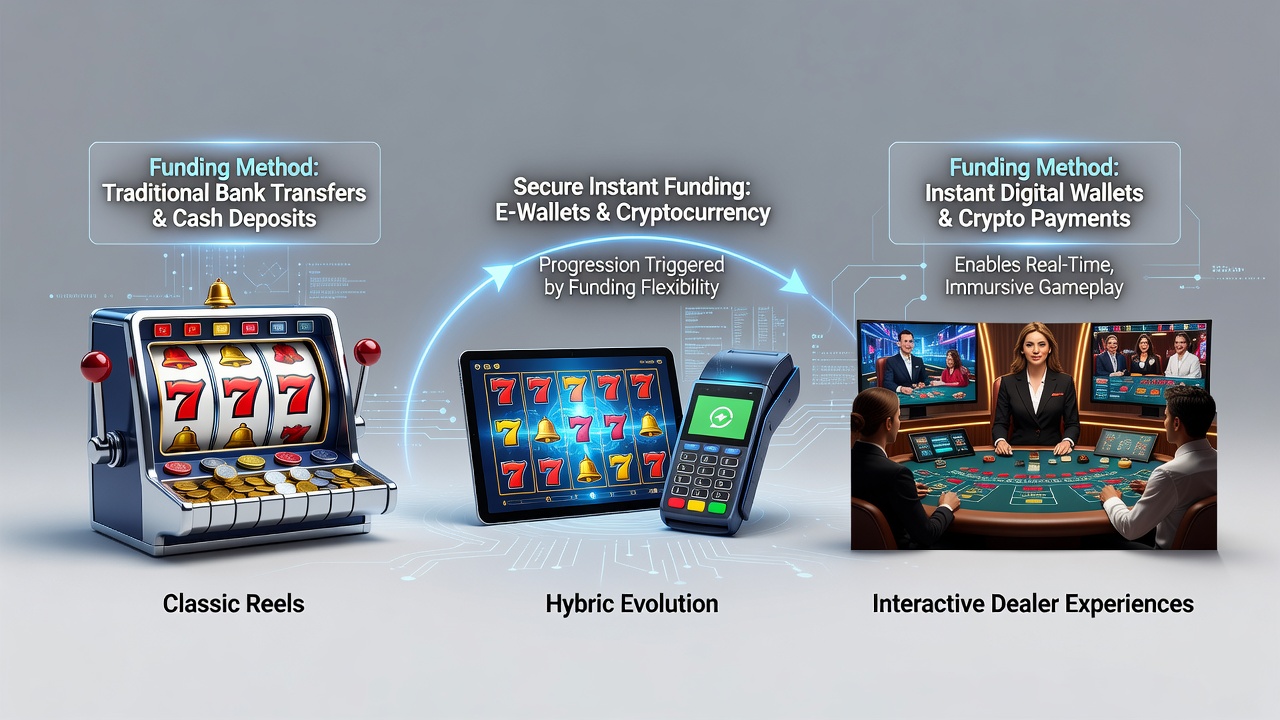
Payment Options and Their Effect on Player Movement from Traditional Slots to Real-Time Gaming Tables
Payment method selection shapes how players move between game types because processing speeds, transaction limits, and regional availability determine what becomes feasible next. Classic reel slots often require smaller, frequent deposits that suit credit cards or prepaid options while live dealer tables demand quicker access to larger balances that favor e-wallets or instant bank transfers. Data collected across multiple jurisdictions shows these differences directly affect session length and game progression patterns. Observers note that credit and debit card deposits remain the most common entry point for reel-based play. These methods typically clear within seconds in most markets yet carry daily caps that can restrict sudden shifts toward higher-stakes live tables. When players encounter those caps they frequently switch to alternative funding routes to maintain momentum. E-wallet services such as digital wallets and prepaid accounts accelerate the transition because they bypass some banking delays. Research from regulatory bodies indicates that average transfer times for these services drop below thirty seconds in supported regions, allowing seamless movement from low-volatility reel sessions into interactive dealer environments without interrupting play flow. Limits on these accounts tend to scale higher than card-based options, supporting larger buy-ins common at live tables. Bank transfers and wire services introduce longer processing windows that can pause progression. Although they offer higher maximum amounts, the one-to-three-day settlement periods documented in several markets encourage players to plan ahead rather than switch games mid-session. Those who rely on scheduled transfers often complete reel play cycles first before committing funds to live dealer tables. Crypto-based funding has expanded in jurisdictions that permit it. Blockchain transactions recorded in 2025 and early 2026 demonstrate near-instant confirmation on major networks, removing the friction that once separated reel enthusiasts from live formats. Transaction fees remain variable yet the speed advantage encourages repeated movement between game categories when volatility or table minimums change. In September 2026 figures released by the Nevada Gaming Control Board revealed that casinos accepting multiple instant funding channels recorded higher cross-category play rates compared with sites limited to card-only deposits. The same dataset showed a measurable increase in live dealer participation once players adopted at least two distinct payment types.  Geographic availability further modulates these patterns. In markets where local banking regulations slow card processing, players gravitate toward e-wallets early, which shortens the interval between first reel spins and entry into dealer-hosted tables. Australian regulatory reports compiled by the Australian Communications and Media Authority document similar shifts when instant options expand. Fee structures also play a documented role. Methods carrying percentage-based charges discourage repeated small deposits typical of reel play and push users toward single larger transfers better suited to live table buy-ins. Conversely, flat-fee services preserve flexibility across both formats because cost remains predictable regardless of amount or frequency. Security features tied to each method influence sustained engagement. Two-factor authentication common on e-wallets adds a verification step that some players complete once and then reuse across sessions, smoothing the path from reels to live interaction. Card transactions sometimes require additional verification per deposit, which can interrupt flow and delay the decision to explore new game types. Industry analyses from the European Gaming and Betting Association track these behaviors across operators. The reports note that sites offering unified wallets across game verticals see elevated rates of players starting on classic reels and later migrating to live dealer formats within the same account session. Unified balance visibility removes the need to manage separate funding streams. Payment method restrictions imposed by individual operators create another variable. Some platforms restrict live dealer access to accounts funded through approved instant channels, effectively guiding player progression along specific deposit routes. These rules appear most frequently in regions with strict responsible gambling frameworks that tie funding speed to session monitoring tools. The combination of speed, limits, fees, and regional rules therefore determines how readily a player moves from classic reel engagement into interactive dealer experiences. Multiple data sources confirm that wider payment diversity correlates with smoother transitions while narrower options tend to keep activity concentrated within one game category.
Payment method selection shapes how players move between game types because processing speeds, transaction limits, and regional availability determine what becomes feasible next. Classic reel slots often require smaller, frequent deposits that suit credit cards or prepaid options while live dealer tables demand quicker access to larger balances that favor e-wallets or instant bank transfers. Data collected across multiple jurisdictions shows these differences directly affect session length and game progression patterns. Observers note that credit and debit card deposits remain the most common entry point for reel-based play. These methods typically clear within seconds in most markets yet carry daily caps that can restrict sudden shifts toward higher-stakes live tables. When players encounter those caps they frequently switch to alternative funding routes to maintain momentum. E-wallet services such as digital wallets and prepaid accounts accelerate the transition because they bypass some banking delays. Research from regulatory bodies indicates that average transfer times for these services drop below thirty seconds in supported regions, allowing seamless movement from low-volatility reel sessions into interactive dealer environments without interrupting play flow. Limits on these accounts tend to scale higher than card-based options, supporting larger buy-ins common at live tables. Bank transfers and wire services introduce longer processing windows that can pause progression. Although they offer higher maximum amounts, the one-to-three-day settlement periods documented in several markets encourage players to plan ahead rather than switch games mid-session. Those who rely on scheduled transfers often complete reel play cycles first before committing funds to live dealer tables. Crypto-based funding has expanded in jurisdictions that permit it. Blockchain transactions recorded in 2025 and early 2026 demonstrate near-instant confirmation on major networks, removing the friction that once separated reel enthusiasts from live formats. Transaction fees remain variable yet the speed advantage encourages repeated movement between game categories when volatility or table minimums change. In September 2026 figures released by the Nevada Gaming Control Board revealed that casinos accepting multiple instant funding channels recorded higher cross-category play rates compared with sites limited to card-only deposits. The same dataset showed a measurable increase in live dealer participation once players adopted at least two distinct payment types.
Geographic availability further modulates these patterns. In markets where local banking regulations slow card processing, players gravitate toward e-wallets early, which shortens the interval between first reel spins and entry into dealer-hosted tables. Australian regulatory reports compiled by the Australian Communications and Media Authority document similar shifts when instant options expand. Fee structures also play a documented role. Methods carrying percentage-based charges discourage repeated small deposits typical of reel play and push users toward single larger transfers better suited to live table buy-ins. Conversely, flat-fee services preserve flexibility across both formats because cost remains predictable regardless of amount or frequency. Security features tied to each method influence sustained engagement. Two-factor authentication common on e-wallets adds a verification step that some players complete once and then reuse across sessions, smoothing the path from reels to live interaction. Card transactions sometimes require additional verification per deposit, which can interrupt flow and delay the decision to explore new game types. Industry analyses from the European Gaming and Betting Association track these behaviors across operators. The reports note that sites offering unified wallets across game verticals see elevated rates of players starting on classic reels and later migrating to live dealer formats within the same account session. Unified balance visibility removes the need to manage separate funding streams. Payment method restrictions imposed by individual operators create another variable. Some platforms restrict live dealer access to accounts funded through approved instant channels, effectively guiding player progression along specific deposit routes. These rules appear most frequently in regions with strict responsible gambling frameworks that tie funding speed to session monitoring tools. The combination of speed, limits, fees, and regional rules therefore determines how readily a player moves from classic reel engagement into interactive dealer experiences. Multiple data sources confirm that wider payment diversity correlates with smoother transitions while narrower options tend to keep activity concentrated within one game category.